
Urban Grow
In dense Indian cities, access to fresh, home-grown produce is limited by space constraints and lack of knowledge. While many urban households are interested in gardening, beginners often struggle to maintain plants due to inconsistent care, unclear guidance, and overwhelming information.
Existing solutions either assume prior expertise or fail to adapt to small-space living conditions common in Indian homes such as balconies and compact terraces.


8 weeks
UX/UI designer
Figma
Research
To understand user behavior, I conducted interviews with 5 urban residents who had either attempted or were interested in home gardening.
Key Insights:
Users forget watering and care routines due to busy schedules
Beginners feel intimidated by plant care information
Most users rely on trial-and-error rather than structured guidance
Limited space leads to confusion about what plants to grow
Define
Problem Statement:
How might we help urban Indian households grow and maintain plants in limited spaces without requiring prior expertise?
Pain Points:
Lack of consistent plant care routines
Overwhelming and fragmented information
Poor understanding of space optimization
IDEATION
Based on the insights, I explored multiple directions through sketches and quick concepts.
Key Ideas Explored:
Smart reminders for watering and care
Personalized plant recommendations based on space
Step-by-step guidance for beginners
Visual layout planner for small spaces
SOLUTION
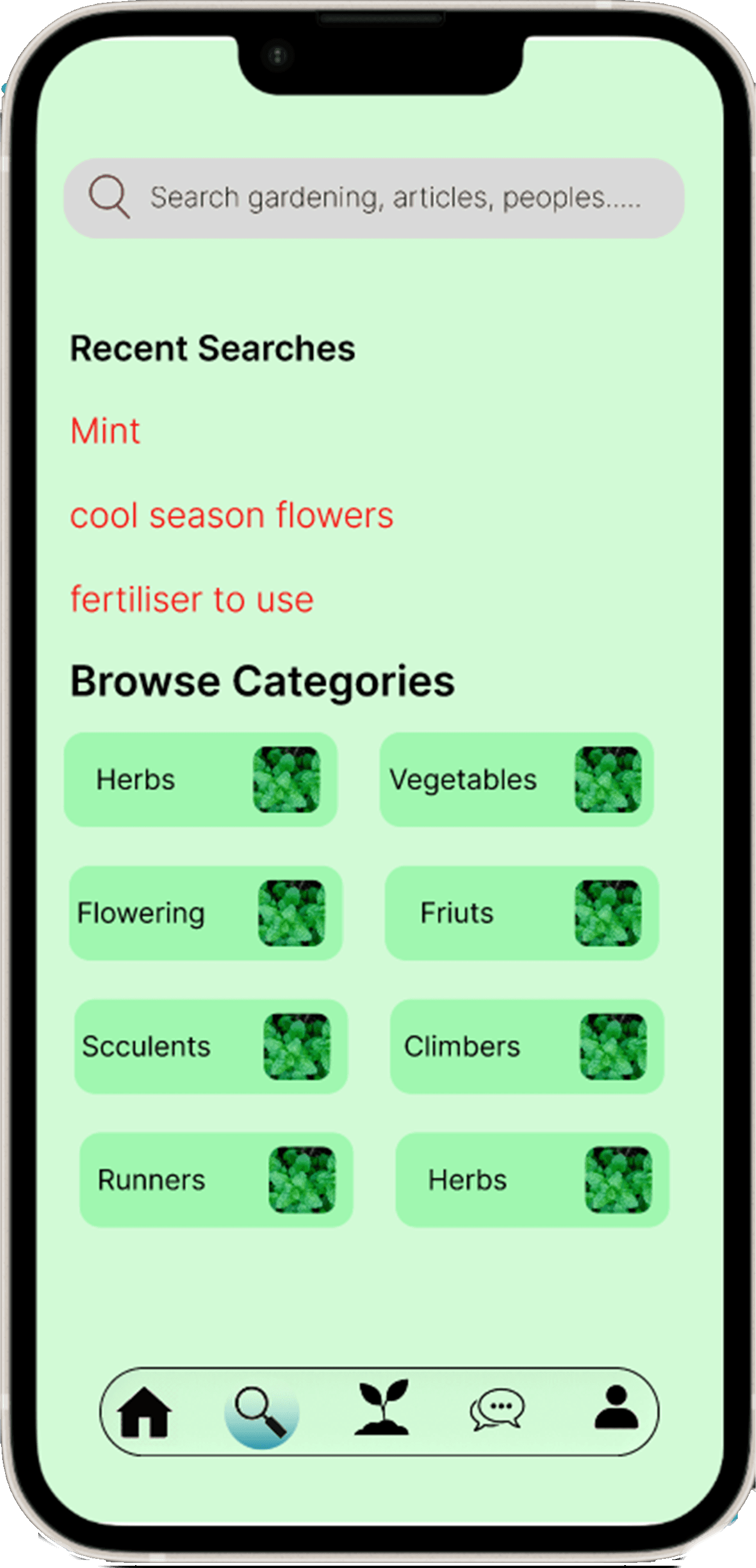
UrbanGrow is a mobile application that simplifies home gardening for urban users by offering:
Personalized plant suggestions based on available space and sunlight
Smart care reminders tailored to each plant
Easy-to-follow guidance for beginners
A simple dashboard to track plant health
The solution focuses on reducing cognitive load and making gardening approachable for first-time users.


IMPACT & REFLECTION
This project helped me understand the importance of designing within real-world constraints, especially in the context of Indian urban living.
I learned how simplifying information and providing structured guidance can significantly improve user confidence and engagement. It also reinforced the value of grounding design decisions in user research rather than assumptions.